

Overview
Following best practices ensures your flows are engaging, effective, and user-friendly. By optimizing content placement, maintaining a consistent design, and targeting the right audience at the right time, you can maximize user engagement and adoption. It’s essential to test flows thoroughly, keep messaging clear and concise, and minimize disruptions to the user experience. Leveraging data-driven insights and iterating based on feedback will help refine your onboarding and product adoption strategies for the best results.Crafting Flows for maximum usability
By following the best practices below, you can create flows that enhance user experience, drive engagement, and improve overall product adoption.- Keep Flows Concise and Actionable
- Avoid long, complex flows that may lose user interest.
- Break down lengthy processes into smaller, digestible steps.
- Focus on key takeaways and provide clear next steps for users.
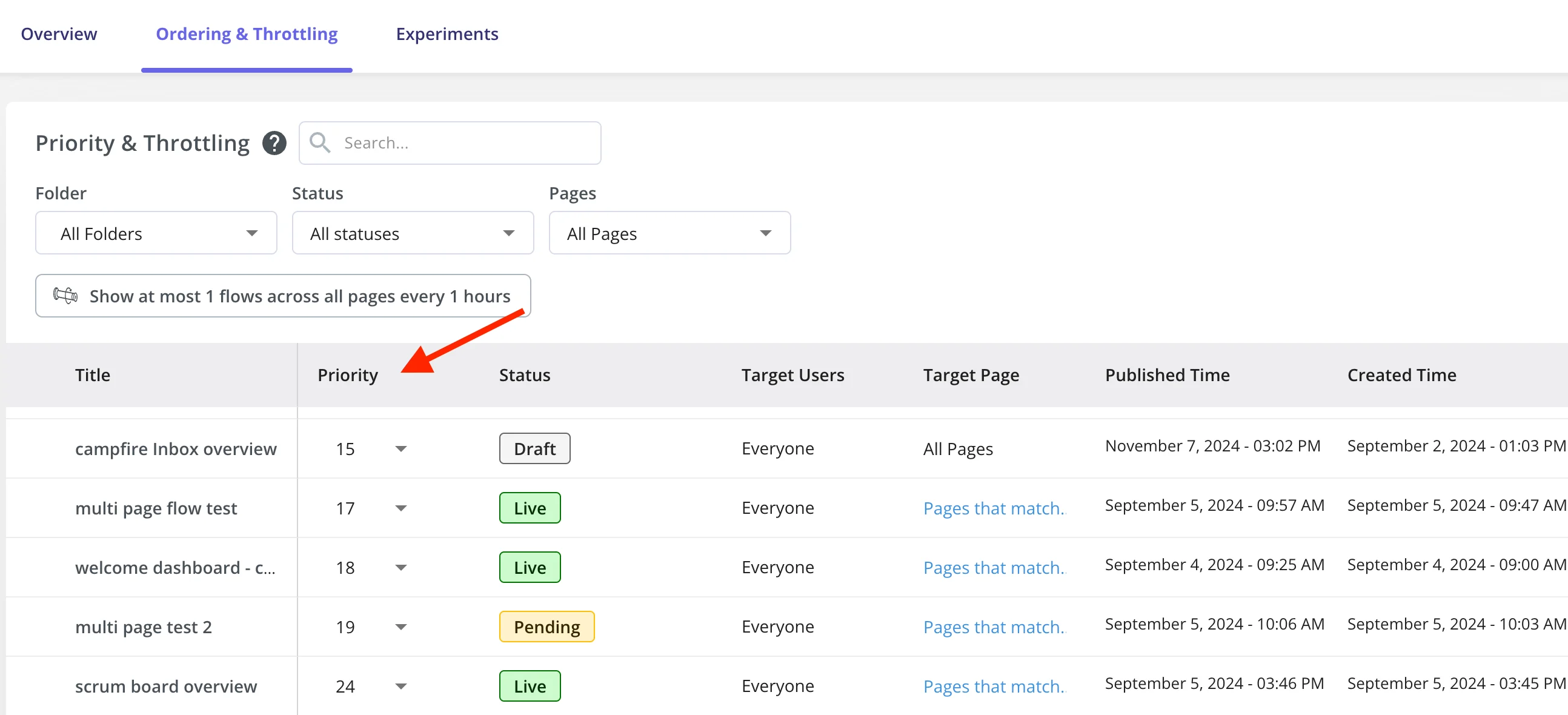
- Set up Flow prioritization
- Ensure critical flows take precedence over less important ones.
- Use priority settings to control which flow appears first when multiple flows are eligible.
- Priority only applies when “Order and throttling” is respected. If it’s ignored, eligible flows display in chronological order of creation instead.
- Organize and Order Flows Strategically
- Structure flows in a logical order to guide users smoothly.
- Introduce flows progressively rather than overwhelming users all at once.
- Align flow sequences with key user milestones and actions. For example, triggering the flows after they click on certain buttons or complete pre-requisite flows.
- When chaining flows (triggering one after another completes), test the full sequence end to end. Sequences that rely on driven actions or elements on dynamic pages can skip or stall if an element isn’t reliably detected.
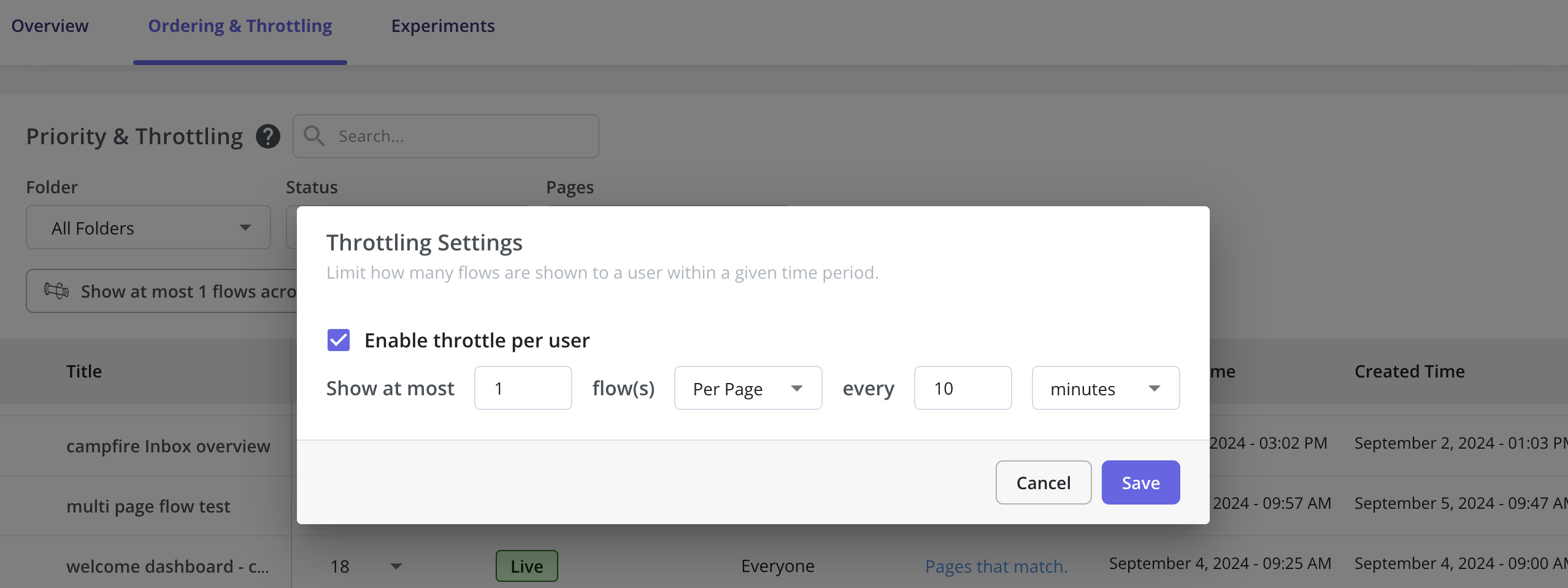
- Implement Throttling to Avoid Overloading Users
- Limit how often users see flows to prevent fatigue.
- Recurrence is evaluated per user. Set it to show once per session, or to repeat on an interval measured in minutes, hours, or days.
- Choose the interval deliberately: a short interval can resurface a flow within the same visit, while “once per session” keeps it to a single appearance per session.
- Avoid Overwhelming the Screen with Too Many Flows
- Do not display multiple flows back-to-back; space them out appropriately.
- Consider user experience as too many prompts can lead to frustration or dismissals.
- Use contextual targeting to show the right flow at the right time.
- Keep user properties and segment data accurate. Targeting is evaluated against the user’s current attributes at the moment the flow is checked, so stale or recently changed roles and properties are the most common cause of a flow reaching the wrong audience.
FAQs
What would be the ideal length of a flow?
What would be the ideal length of a flow?
The ideal flow length depends on the process and the use case you’re addressing. As a best practice we recommend keeping flows to around 3 to 5 steps. Longer flows tend to feel overwhelming, leading users to lose interest and exit before completion. Aim for a streamlined experience that delivers value efficiently.
What should I do if users are dismissing flows too often?
What should I do if users are dismissing flows too often?
If users frequently dismiss flows, consider simplifying the content and reducing the number of steps. Ensure the flow is relevant to the user’s journey by refining targeting settings. Additionally, provide an easy way for users to revisit the flow later, such as through the Resource Center or a triggered event.